
Dragon Quest 1 Still Captivates: A Deep Dive into its Enduring Appeal and Modern Relevance









Popular Now
 God of War Ragnarök
 Roblox
 Garena Free Fire: Kalahari
 BeamNG.drive
 Poppy Playtime
 Counter-Strike 2
 Candy Crush Saga
 Auto X Drift Racing 3
 Black Myth: Wukong
 The Legend of Zelda

The Enduring Legacy of Dragon Quest 1: Why the Original JRPG Still Captivates in the Modern Era
In the vast landscape of video game history, few titles possess the enduring power to captivate players decades after their initial release. Among these hallowed few, Dragon Quest 1 (originally released as Dragon Warrior in North America), a foundational pillar of the Japanese Role-Playing Game (JRPG) genre, stands as a testament to timeless design and unparalleled charm. Despite its humble 8-bit origins on the Famicom/NES, revisiting the legendary adventure today reveals a game that, quite astonishingly, holds up with remarkable grace, offering a surprisingly refreshing experience amidst the complexity of contemporary titles.
Released in 1986 in Japan, Dragon Quest introduced a generation to the fantasy tropes that would define countless RPGs to come: a lone hero, a kidnapped princess, a menacing Dragonlord, and a sprawling world waiting to be explored. It wasn’t just a game; it was a blueprint. While many early console RPGs struggled with clunky mechanics or impenetrable narratives, Dragon Quest 1, under the visionary guidance of Yuji Horii, character designs by Akira Toriyama, and music by Koichi Sugiyama, established a remarkably intuitive and engaging formula that feels surprisingly contemporary even now. Its straightforward approach to questing and combat, rather than feeling archaic, often feels like a deliberate design choice that enhances its enduring appeal.
Simplicity as Strength: Unpacking Dragon Quest’s Core Mechanics
One of the primary reasons for Dragon Quest 1’s continued relevance lies in its elegant simplicity. The game eschews convoluted tutorials and overwhelming menus, opting instead for a streamlined interface that prioritizes accessibility. Players control a single hero, the descendant of the legendary Erdrick, on a perilous journey to defeat the Dragonlord. The core gameplay loop involves:
- Exploration: Navigating towns, castles, and a world map dotted with dangerous encounters.
- Turn-Based Combat: Engaging monsters in a classic turn-based system, making strategic choices for attacks, spells, and items.
- Character Progression: Gaining experience points to level up, increasing stats, and learning new spells.
- Resource Management: Carefully managing gold for equipment, healing items, and inn stays.
This minimalist design is, paradoxically, its greatest strength. Modern RPGs often layer intricate systems upon systems, leading to choice paralysis or a steep learning curve. Dragon Quest 1, by contrast, focuses on the purity of the adventure. There’s a clear objective, immediate feedback on progress, and every encounter, every gold piece earned, feels meaningful. This foundational simplicity allows players to focus on the narrative and the thrill of exploration without getting bogged down by unnecessary complexity. For veteran gamers seeking a palate cleanser or newcomers interested in the roots of the genre, this accessibility is a significant draw.
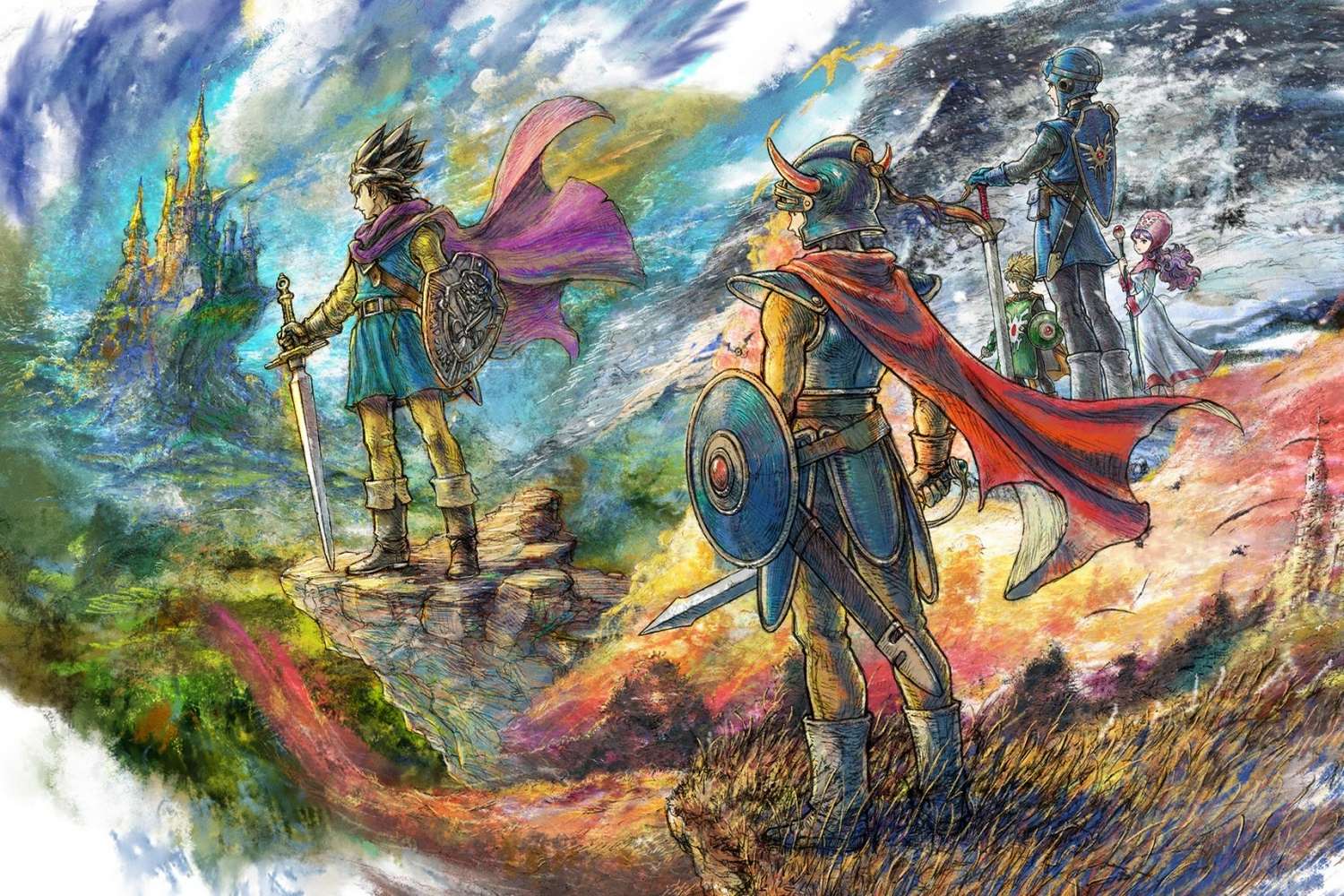
The Art of Iteration: How Dragon Quest Paved the Way for Modern JRPGs
Beyond its simple elegance, Dragon Quest 1’s influence on the broader gaming industry cannot be overstated. It was instrumental in popularizing the JRPG genre in Japan, laying down a design language that would be adopted and refined by countless titles, including its direct competitor, Final Fantasy. Key innovations and enduring design philosophies include:
- Overworld Map: The iconic world map perspective, allowing players to traverse vast distances between points of interest.
- First-Person Combat View: Though simplistic, this perspective was immersive for its time and became a staple for early console RPGs.
- Menu-Driven Interaction: Nearly all interactions, from talking to NPCs to opening chests, were handled through a clear menu system, standardizing user experience.
- Grinding with Purpose: While often cited for its