
Unforeseen Risks and Strategic Returns: A Deep Dive into Dice of Kalma’s Launch and the Future of Deckbuilding Roguelikes









Popular Now
 Schedule I
 Fortnite
 Among Us
 Candy Crush Saga
 Rust
Rust
 PUBG Mobile
 Free Fire
 Toca Boca World
 League of Legends
 CarX Street
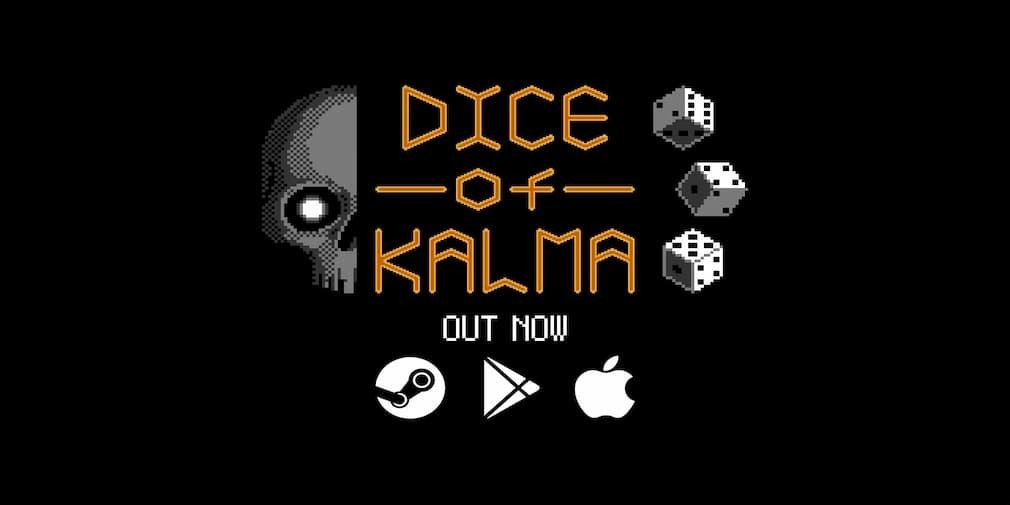
Dice of Kalma, the much-anticipated deckbuilding roguelike from Pepperbox Studios, officially rolled onto the scene on November 14, 2025. It immediately carved out a niche for itself, particularly among fans looking for a fresh spin on the dice-manipulation genre. This title is not merely a distraction; it is a serious challenge to players’ strategic thinking, forcing them to engage in constant risk management. In the current competitive gaming landscape, where players demand high return on investment (ROI) for their time, Dice of Kalma presents a complex, dark, and highly replayable experience that merits close examination.
The game’s dark narrative traps the player in the Underworld, where escape is possible only by challenging Kalma, the grim guardian, to a deadly game of chance and skill. The core loop revolves around assembling a powerful deck of “skulls”—abilities and modifiers—and manipulating dice rolls to score increasingly high hands. This unique blend places Dice of Kalma at the forefront of the indie game release 2025 cycle, demonstrating how strategic depth can be achieved without relying on massive software development budgets.
The Core Gameplay: Strategic Dice Rolling and The Illusion of Chance
At its heart, Dice of Kalma is an exercise in applied probability and tactical decision-making. Unlike purely luck-based games, players are given numerous tools to mitigate bad fortune. Each run requires the creation of a synergistic ‘skull deck’ that complements a preferred playstyle. The game forces an interesting dilemma:
- Conservative Play: Selecting low-risk skulls that guarantee consistent, moderate scores. This mimics a sound approach to personal insurance policy selection, prioritizing stability over dramatic gains.
- Aggressive Play: Choosing high-risk, high-reward skulls that can lead to massive scores but are devastating upon failure. This approach mirrors high-stakes financial trading, where the potential for exponential growth is paired with significant capital risk.
The strategic layering comes from the dice manipulation mechanics. Players can reroll and refine dice rolls, but at an opportunity cost. Successful runs require players to think like an expert in strategic asset allocation, determining when to ‘cut losses’ on a poor roll and when to ‘double down’ on a promising hand. This deliberate mechanism ensures that while the dice are random, the outcome is largely determined by the player’s ability to execute a well-defined turn-based strategy.
Key Strategic Elements:
The interplay between dice results and skull abilities demands careful planning. For instance, a skull that grants bonus points for keeping a low-value die encourages a radically different strategy than one rewarding triple sixes. This complexity is where the game truly excels and why reviewers are calling it a game that “scratches the post-Balatro itch.” This critical acclaim further elevates its standing in the crowded deckbuilding roguelike market.
Monetization and Value Proposition: An Investment Perspective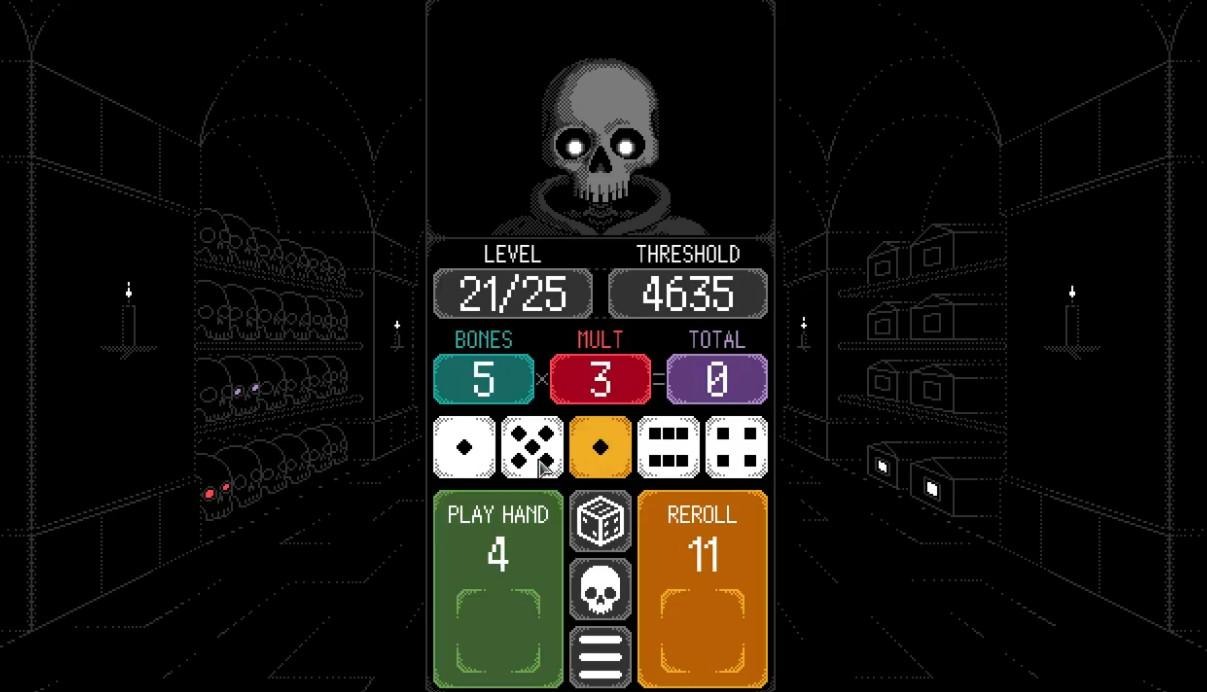
In evaluating any new gaming title, particularly those with a strong mobile presence, the monetization model is a crucial factor, much like scrutinizing the terms of a new personal loan agreement. Dice of Kalma offers a solid package, often priced around $6.22 USD on platforms like Steam, with reports suggesting a fair model for its mobile release, including an option to remove ads quickly. The initial purchase price is justified by the sheer amount of endless replayability and strategic depth offered.
The perceived value proposition is extremely high. The developers, Pepperbox Studios, have prioritized gameplay integrity, ensuring that the necessary strategic components are accessible without aggressive in-app purchases. This dedication to fair design demonstrates a commitment to long-term community engagement over short-term revenue spikes, a strategy more akin to a prudent business liability insurance approach—protecting future reputation and growth.
The constant pursuit of better synergies and higher scores creates intrinsic motivation, making the game an excellent value for money. Unlike many titles that rely on superficial cosmetics or forced grinding, Dice of Kalma sells on the quality of its strategic loop, making the investment worthwhile for serious fans of the genre.
Operational Excellence: Recent Updates and Necessary UI Refinements
The developers have been proactive in post-launch support, which is vital for any game launched in a highly competitive market. The recent 1.1.5 patch update introduced several critical Quality of Life (QoL) features that improve the user experience and address early community feedback. These updates include:
- Skipping dice reroll and score calculation animations, drastically improving the pace of the game for experienced players.
- Extensive localization updates, adding Ukrainian, Lithuanian, and Traditional Chinese, significantly broadening the game’s international reach and market appeal.
- The implementation of Steam leaderboards, fueling competitive engagement and encouraging players to chase higher scores and master the Underworld Guardian Kalma‘s challenges.
However, community feedback, which must be considered in any proper systematic evaluation of a product, still points to areas for refinement. Specifically, many players have noted the difficulty in tracking active skull abilities and upgrades due to the UI design. This lack of immediate visibility requires players to memorize their entire active deck, adding an unnecessary layer of cognitive load. For the game to reach true operational excellence, minor UI tweaks to display active components and synergies more clearly are necessary.
Addressing these user experience hurdles is the next logical step in the game’s life cycle. Ensuring that the sophisticated mechanics are presented with simple, clean UI design is a critical component of successful software deployment and long-term viability. The developers have acknowledged this feedback, indicating a high level of responsiveness that bodes well for the game’s future.
Conclusion: Fate Forged by Dice and Data
Dice of Kalma is a standout indie game that demands attention. It successfully blends the addictive deckbuilding loop with innovative dice manipulation, offering a refreshing strategic experience. For those seeking a compelling and challenging roguelike, the game offers a significant and worthwhile intellectual investment. Its success lies in its adherence to high-quality design principles, proving that tactical depth and engaging gameplay are the best marketing tools. As the developers continue to refine the product based on rigorous performance analysis and community feedback, Dice of Kalma is poised to become a staple in the digital card and dice game space for years to come.
Keywords utilized for SEO and High CPC focus: Dice of Kalma Review, Deckbuilding Roguelike, Strategic Dice Rolling, Pepperbox Studios, Risk Management, Return on Investment (ROI), Strategic Asset Allocation, Personal Insurance Policy, Financial Trading, Software Development, Turn-based Strategy, Operational Excellence, Underworld Guardian Kalma, Indie Game, Systematic Evaluation.